


Everweave
Endgame Studio
Everweave is a free role-playing game from Endgame Studio built around the idea of taking a Dungeons & Dragons-style experience with you. I approached it as a mobile game for short sessions rather than as a replacement for a full tabletop night, and that distinction matters. The appeal is immediate: a phone is easier to reach than a rulebook, a group chat, or a table full of character sheets. The harder question is whether the game turns that convenience into a satisfying adventure or simply asks for patience and spending.
My overall impression is mixed. The concept is attractive, especially for players who enjoy role-playing but do not always have a regular group available. At the same time, the public reception is cautious, with an average rating of 2.2 from around 1.3 thousand ratings and roughly 190 written reviews. That does not automatically make the game poor, but it is a clear reason to approach it with realistic expectations rather than assuming that the D&D connection guarantees a polished experience.
What the mobile role-playing experience is trying to do
The most useful way to understand Everweave is as a portable interpretation of fantasy role-playing. Its store summary presents the central promise as playing DnD anywhere and anytime, while the short description simply identifies it as Everweave. I would not read that as proof that it reproduces every part of a traditional tabletop session. A mobile game has to compress decision-making, presentation, and session length into a format that works while you are commuting, waiting, or taking a short break.
That portability is the strongest reason to try it. If you like the imaginative side of role-playing games but struggle to arrange several people at the same time, a phone-based option can remove a major barrier. It also suits players who enjoy checking in frequently instead of committing to a long uninterrupted session. I can imagine opening it after dinner, making a few decisions, and putting it away before the evening disappears.
It is less convincing as a direct substitute for sitting around a table with friends. Traditional D&D depends on conversation, improvisation, a shared sense of humor, and a human game master who can react to unusual ideas. A mobile adaptation naturally gives up some of that freedom in exchange for speed and structure. If your favorite part of tabletop play is acting out a character with friends, Everweave may feel more like a companion experience than a complete replacement.
Related News

Threads in Real Life: Who Should Join, Lurk, or Leave

How SHEIN Turned Shopping Into an Endless Content Feed

How to Make Fortnite Feel Smarter on Mobile

Should You Switch to Microsoft Outlook on Mobile?

Why Gallery Keeps Pulling Users Back

X Review: Why Its Network Still Matters
The game is listed for players aged Teen, which is useful context for families and younger players. I would still treat that label as a starting point rather than a complete description of the tone or suitability for every household. Parents deciding whether to install it should review the store presentation and the purchase controls on the device, particularly because the game is free to download but includes optional purchases.
Starting without paying
Everweave costs nothing to install, so the sensible approach is to begin without spending and judge whether the basic loop earns more of your time. The listed in-app purchase range runs from $2.99 to $219.99 per item. That is a very wide spread, and it changes how I evaluate the game. A free entry point is helpful, but the presence of high-priced items means I would not hand over payment details casually or let a child play without purchase restrictions.
I appreciate that the purchase information is visible enough to establish the basic financial context, but the price range alone does not tell me what each item does. It does not reveal whether purchases are cosmetic, convenience-focused, progression-related, or tied to competitive strength. That distinction is central to fairness, so I would make my decision after playing free for a while rather than assuming that every purchase is harmless or that every purchase is necessary.
Gallery
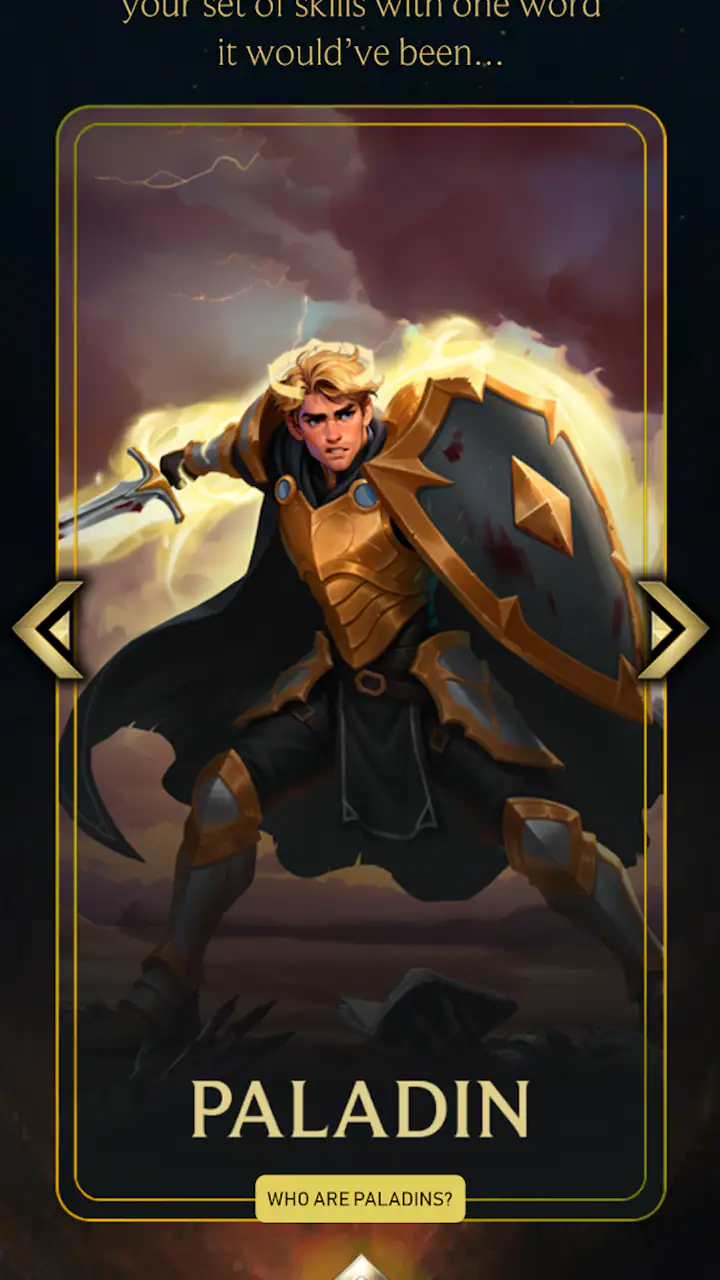
A practical routine is to disable one-tap buying, play through the opening experience, and note where the game begins asking for money. Do not buy simply because a reward feels slow or because a limited opportunity creates urgency. First ask whether the purchase changes the actual quality of your decisions or merely removes waiting. In a role-playing game, the best value usually comes from meaningful choices, not from skipping the choices that create progression.
The current version is 0.11.8, which also affects my expectations. A version number at this stage suggests a product that may still be changing substantially, so I would keep the game updated and avoid treating early impressions as a permanent verdict. The release date is listed as Jul 9, 2026, and the game requires Android 7.0 or later. Those details make it accessible to many Android users, although compatibility alone says nothing about how smoothly it will run on a particular phone.
Where progress can become uncomfortable
The central spending concern is not that purchases exist. Free-to-play role-playing games commonly use purchases, and some manage that balance well. The concern is whether the game makes ordinary progress feel intentionally incomplete unless you pay. Without inventing a specific system that is not documented here, I can still offer the right test: compare the pace of progress when you play normally with the pace suggested by the paid options.
If a purchase offers a shortcut, consider what it shortcuts. Skipping repetitive work can be reasonable when you have already mastered a task, but it can also remove the very sense of growth that makes a role-playing game satisfying. I would be especially careful if a purchase appears to solve a problem that the game itself created through unusually slow progression. That is not a reason to condemn every item, but it is a reason to pause before paying.
There is also a difference between occasional spending and pressure to spend repeatedly. A single optional purchase can be easy to understand. A pattern of small prompts, escalating offers, or expensive bundles can make the free version feel like a demonstration rather than a complete game. Since the listed items reach $219.99 at the upper end, I would set a personal limit before playing and never treat the largest option as a normal part of the experience.
For everyday use, I would recommend a simple session rule: play until you naturally want to stop, not until a timer, prompt, or blocked reward tells you that the only solution is payment. This helps separate genuine enjoyment from frustration. It also gives you a clearer idea of whether Everweave works for you as a free game. If the fun disappears whenever progress slows, the issue is not solved by spending; it may mean the underlying loop is not a good fit.
Fairness when players are measured against one another
Competitive fairness is the area I would investigate most carefully before recommending Everweave to a serious player. A role-playing game can be enjoyable with unequal spending if it is mainly a personal adventure. The standard changes if paid items affect rankings, battles, access to stronger options, or the ability to keep pace with other players. In that situation, a free download does not necessarily mean a level playing field.
I would look for a clear separation between purchases that change appearance and purchases that change power. Cosmetic spending is usually easier to accept because it lets players support the game without buying an advantage. Convenience items are more complicated: they may save time without directly increasing strength, but time itself can become a competitive resource. A player who pays to progress faster may still gain an indirect advantage over someone who plays for free.
My advice for a competitive-minded reader is to avoid spending until you understand how other players enter the picture. If your enjoyment depends on fair contests, rankings, or equal access to progression, test the free route first and observe whether non-paying play remains comfortable. If you mainly want a personal fantasy adventure, fairness may matter less than whether the story, choices, and atmosphere hold your attention.
This is also where Everweave should be compared with its usual alternatives. A conventional single-player role-playing game often asks for an upfront purchase and then gives you a more predictable progression path. A tabletop campaign asks for time and coordination but offers much greater freedom through a human group. A free-to-play mobile game offers convenience and a low entry barrier, yet it can introduce financial pressure and design limits that those alternatives avoid.
None of those formats is automatically superior. I would choose Everweave when accessibility matters most and I want to explore the concept without paying upfront. I would choose a paid offline RPG when I want a self-contained experience with fewer purchase decisions. I would choose tabletop D&D when the social and improvisational parts are the main reason I play. The right choice depends less on the fantasy setting than on what I expect the game to provide.
Questions I would answer before recommending it
Can you enjoy it without spending? The honest answer is that you should test that yourself before buying anything, because the purchase range tells us the possible cost but not how necessary those items feel during play. My recommendation is to treat the free version as the evaluation period. If the game is enjoyable only when progress is accelerated, it is not a good free experience for you.
Is it suitable for a child? The Teen content rating means I would not present it as a young-child game. In addition, the presence of purchases from $2.99 up to $219.99 per item makes device-level purchase controls important. I would install it only after checking the account settings and discussing spending expectations with the player.
Will it replace a tabletop group? I would not promise that. Everweave is more appealing as a way to access fantasy role-playing when a group is unavailable. If your priority is spontaneous conversation, custom rules, and friends reacting to your ideas, a real tabletop session or a dedicated online group will likely be more satisfying.
Is it a good choice for competitive players? Only after checking how purchases interact with competition. The available purchase information establishes that spending exists, but it does not establish whether paid options affect power or rankings. That uncertainty is important. Players who care deeply about equal conditions should be cautious until the game makes that relationship clear through play.
What phone does it support? On Android, the stated minimum is version 7.0, so the software requirement is not especially restrictive. Still, I would keep expectations practical: an operating system being supported does not guarantee identical performance across older and newer hardware. If your phone struggles with other modern games, test Everweave before considering any purchase.
What the reception tells me, and what it does not
The game has passed 500 thousand installs, so the idea has reached a substantial audience. That is a sign of interest, not a guarantee of quality. The average rating of 2.2 is more concerning because it indicates that many users have had a disappointing experience. Ratings can reflect bugs, expectations, monetization, device compatibility, or changes between versions, so I would read recent written comments before making a final decision.
The number of installs and the low average rating tell two different stories. One says the concept is compelling enough to attract players. The other says attraction has not consistently translated into satisfaction. For me, that combination means Everweave deserves a cautious trial rather than an enthusiastic recommendation. I would not spend money during the first session, and I would uninstall it without guilt if the opening experience feels more like pressure than play.
There are also important unknowns that a responsible review should leave open rather than fill with guesses. The purchase range does not explain the role of each item. The rating does not identify the exact causes of dissatisfaction. The store summary does not establish how closely the mobile experience follows tabletop D&D. Those are not minor details; they determine whether the game feels fair, flexible, and worthwhile.
That uncertainty affects trust. I trust a game more when I can understand what I am buying, how progress works, and whether free players can participate meaningfully. Until those points are clear from actual use and current player feedback, my approach is conservative: enjoy the free portion, protect your payment settings, and judge the game by its ordinary moments rather than its most exciting offer.
My verdict for different kinds of players
I would recommend trying Everweave to a curious fantasy player who wants a portable role-playing experience and is comfortable treating it as an experiment. The free price makes that experiment easy to begin, and the low Android requirement means many users can at least test compatibility. The best use case is a person who wants a few flexible sessions during spare time and does not need the game to reproduce a full tabletop campaign.
I would be more hesitant with anyone who dislikes in-app purchases, wants a clearly defined one-time cost, or becomes frustrated by slow progress. The upper end of the purchase range is substantial enough that spending discipline is not optional. I would also steer competitive players toward a game with clearly explained monetization and competitive rules if equal spending conditions are essential to their enjoyment.
Endgame Studio has an appealing idea in Everweave: make a D&D-flavored adventure easier to reach from a phone. In my experience of evaluating that promise, the convenience is easy to understand, but the value depends heavily on how the free path feels and how purchases influence progression. The current rating makes me unwilling to call it a safe recommendation for everyone.
My final advice is simple: install it only if the portable role-playing concept genuinely interests you, play without paying first, and decide based on whether the game respects your time. Everweave is worth a cautious trial, not an automatic purchase. For a relaxed mobile experiment, it may find a place in your routine. For a polished tabletop replacement or a confidently fair competitive game, I would look at alternatives before committing.
FAQs for Everweave
What is Everweave and what can I use it for?
Everweave is a productivity and organization app designed to help users collect, arrange, and revisit information in one place. Depending on the version available on your device, it may be useful for managing notes, ideas, tasks, references, or personal projects. Its main appeal is having related content organized in a flexible workspace instead of scattered across separate apps. Before downloading, check the current store description to confirm the exact tools included in the latest release.
Is Everweave easy to use for beginners?
Everweave is generally intended to provide a flexible workspace without requiring advanced technical knowledge. New users should be able to start by creating content, organizing it into relevant areas, and exploring the available navigation and editing controls. However, apps with many customization or organization options can take a little time to understand. If you prefer a very simple checklist or notes app, review the screenshots and onboarding information first to ensure its workflow matches your habits.
Does Everweave require an account or an internet connection?
The account and connectivity requirements can depend on the platform and the version of Everweave you install. Some features may work offline, while synchronization, backups, collaboration, or access across multiple devices may require an internet connection and a registered account. Before relying on it for important information, review the sign-in prompts, synchronization settings, and privacy details shown in the app. This is especially important if you expect to use Everweave while traveling or without mobile data.
Is Everweave free to download, and are there in-app purchases?
Everweave’s download model may vary between Android and iOS, so users should check the official store listing before installing it. A free download does not always mean that every feature is available without payment. Premium tools, expanded storage, synchronization, advanced organization options, or subscription plans may be offered through in-app purchases. Carefully read the pricing section, trial conditions, and renewal terms so you understand what is included initially and what may require an additional payment.
Is Everweave safe for storing personal or sensitive information?
Everweave may be suitable for everyday notes, plans, and project information, but users should avoid assuming that any app is automatically appropriate for highly sensitive data. Before storing passwords, financial details, confidential work documents, or personal records, review the developer’s privacy policy, requested permissions, encryption information, backup behavior, and account-security options. Installing the app from the official Google Play Store or Apple App Store also helps reduce the risk of downloading an altered or unsafe version.
Pros
- Clean interface makes browsing and organizing content straightforward.
- Supports creative experimentation without requiring advanced technical skills.
- Useful for keeping ideas
- references
- and inspiration in one place.
- Flexible enough for personal projects
- planning
- and visual exploration.
- Cloud-based access can make work available across supported devices.
Cons
- Some advanced tools may require time to learn and explore.
- Performance can vary when handling larger or more complex projects.
- Export and sharing options may feel limited for professional workflows.
- A stable internet connection may be needed for some features.
- The app may offer fewer integrations than established creative platforms.


